
Capital + SAFI: Integrating ESG Across 91% of Assets Under Management
Start Reading

1. Company at a Glance
In this case, we explore how Bolivian asset manager Capital + SAFI moved sustainability from corporate commitments into its investment model, integrating ESG considerations into due diligence, investment decisions, active ownership and portfolio monitoring. By 2025, 91% of assets under management had undergone an integrated ESG assessment, while the company was actively engaging portfolio companies on issues including deforestation, traceability and climate risk.
Capital + SAFI is a Bolivian asset manager specializing in closed-end investment funds and alternative investments.
Asset Management
Industry
2007
Founded
La Paz, Bolivia
Headquarters
30
Global Workforce
2. The Challenge
Turning sustainability commitments into investment decisions
Capital + SAFI operates in Bolivia, where sustainable finance is still developing and companies often provide incomplete or non-standardized ESG and emissions data. These limitations made it difficult to consistently assess environmental and social risks across an investment portfolio, particularly in sectors exposed to climate change, deforestation and land conversion. At the same time, prospective international investors increasingly demanded stronger governance and credible evidence of impact, while local investors were gradually recognizing the link between environmental, social and climate risks and long-term portfolio value, as Bolivia’s sustainable finance market remains at an early stage. Meanwhile, portfolio companies operating in climate-sensitive value chains, including beef, soybean, sugar and quinoa, faced growing physical climate, traceability and deforestation-related risks.
For Capital + SAFI, the challenge was therefore not simply to adopt an ESG policy, but to make sustainability part of how capital was allocated and investments were managed. The company sought to embed its Shared Value Investing approach throughout the investment cycle so that financial performance, environmental and social impacts, and long-term risks could be considered together—from initial screening and investment evaluation through active ownership and ongoing monitoring.
3. The Action

Building sustainability into the investment process
ESTABLISHING THE GOVERNANCE AND POLICY FRAMEWORK
Starting in 2019, Capital + SAFI developed ESG and climate policies and began building the ESG foundation that would evolve into its Shared Value Investing framework (formalized with FSG from 2022). Sustainability oversight was incorporated into the company’s governance structure, with the Board of Directors responsible for strategic oversight and the Investment and Integrated Risk Management Committees assessing material sustainability issues and escalating them to the Board when required.
The company also established internal policies covering sustainable investment, climate change, and deforestation and conversion. These policies provided the criteria used to assess investments and determine when additional actions or restrictions were required.
INTEGRATING ESG INTO EACH STAGE OF THE INVESTMENT CYCLE
Capital + SAFI redesigned its investment process so that financial, environmental, social and climate considerations were assessed together. The process was structured around four stages:
- Compliance screening: before an investment is considered, the team checks compliance with each fund’s internal rules and the company’s social, environmental and climate exclusion list.
- Integrated assessment: the target company is assessed across financial and non-financial factors, including its maturity in creating shared value. Internal tools and sector-specific frameworks are applied according to the material risks and opportunities identified.
- Commitments and active ownership: depending on the assessment, Capital + SAFI defines financial and non-financial commitments for the investee and determines appropriate active-ownership activities.
- Ongoing monitoring: after investment, financial and non-financial factors are monitored to identify changes in repayment capacity and emerging environmental, social or climate risks that could affect the company’s performance or financial position.
TURNING ESG ASSESSMENTS INTO INVESTMENT CONDITIONS AND ACTION PLANS
Each ESG assessment is submitted to the Investment Committee, which can approve, condition, limit or reject an investment based on the risks identified. In practice, Capital + SAFI has declined investments involving direct-deforestation concerns, adopted precautionary exposure measures for five private issuers in 2025, and conditioned other investments on specific ESG action plans. Assessments remain current for one year and must then be renewed.
USING ACTIVE OWNERSHIP TO STRENGTHEN PORTFOLIO COMPANIES
Capital + SAFI implements a three-year stewardship strategy, with annual engagement priorities based on material ESG, climate and nature-related risks. In 2025, the firm focused on deforestation and land conversion risks in the beef and soybean sectors, promoting sustainability commitments, supply-chain traceability and supplier-area mapping.
One portfolio company illustrates the impact of this approach. With support from Capital + SAFI and a specialized NGO, the company moved from ad hoc sustainability practices to a structured deforestation risk-management framework with defined responsibilities, actions and annual commitments. This enabled more systematic monitoring, although measurable reductions in deforestation or conversion have yet to be demonstrated.
STRENGTHENING ESG AND CLIMATE-RISK MEASUREMENT
Capital + SAFI also strengthened the data and analytical tools supporting its investment process. In 2025, it engaged a specialized consultancy to assess physical climate risks in the soybean, sugar and quinoa value chains, applied the PCAF methodology with data-quality scoring, and piloted E-ledgers in the cattle and soybean sectors to improve environmental accounting.
In 2026, the company developed a portfolio-level Climate Value at Risk model using three NGFS scenarios across 2030, 2040 and 2050. The model translates climate-related shocks into impacts on issuers’ operating earnings and debt-servicing capacity, and from there into probability of default and expected credit losses. Under the Disorderly scenario, the estimated Climate VaR reaches 1.28% of assets under management by 2050, representing a scenario-based measure of potential financial risk rather than a forecast of actual portfolio losses.
In parallel, Capital + SAFI invested in internal expertise through specialist training and externally supported programmes. In 2025, it invested USD 50,000 in overall employee development across all areas, equivalent to approximately 73 training hours per employee.
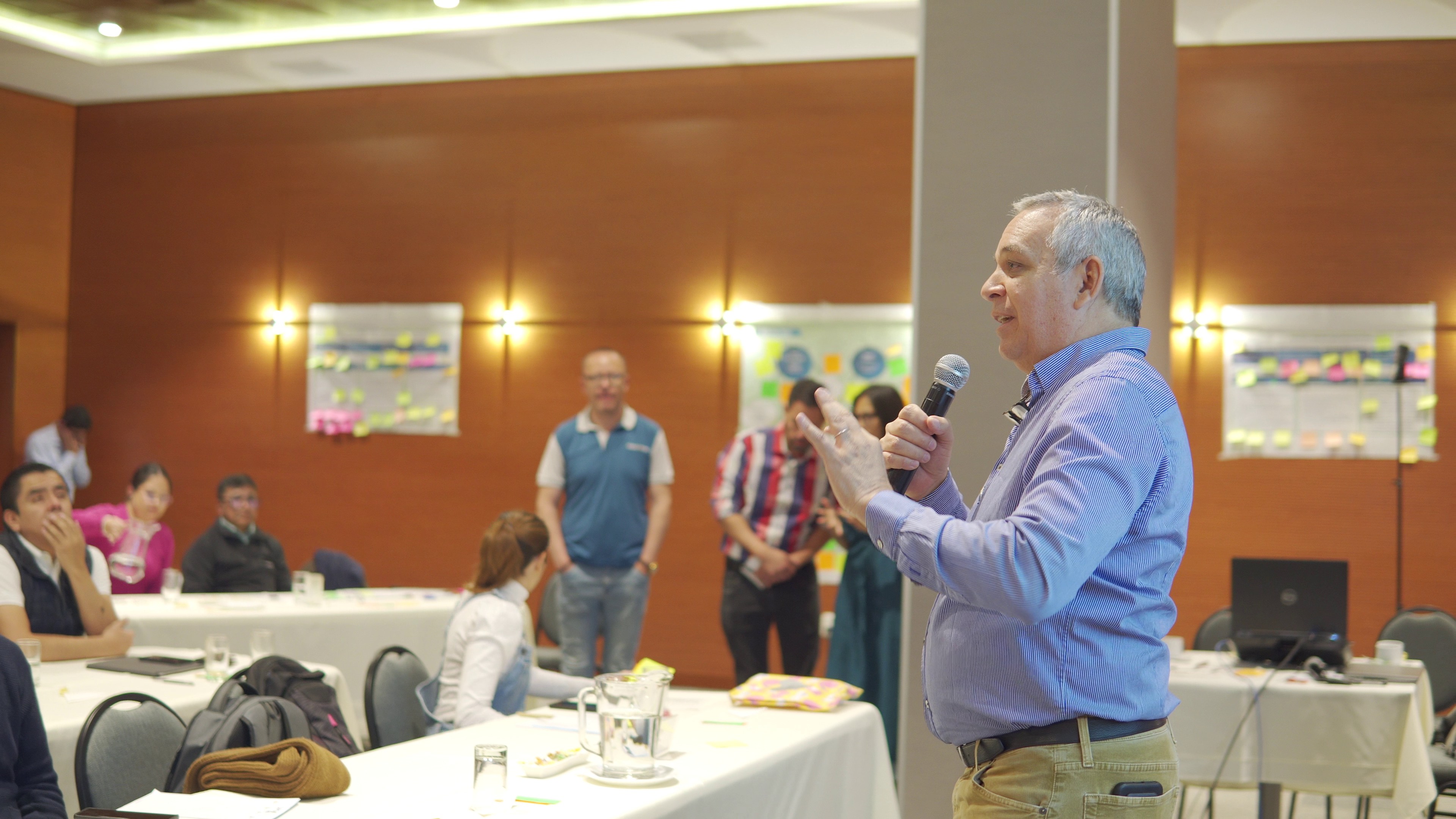
"Capital SAFI...you have been the pioneer for accurately measuring the full carbon footprint from agricultural production.”
Professor Robert Kaplan, Harvard Business School
4. Overcoming Barriers
Improving ESG and climate-risk data quality
Capital + SAFI faced limited access to reliable, standardized ESG, emissions and climate-risk data, particularly in sectors where physical climate and deforestation risks depend on granular supply-chain information. This complicated both portfolio risk assessment and the financial translation of sustainability risks.
The company addressed these limitations progressively through sector-specific climate analysis, PCAF data- quality scoring, E-ledgers and, later, its Climate Value at Risk model. However, data quality and financial translation remain areas for further development, particularly for deforestation and conversion risks, where Capital + SAFI is working to better connect supply-chain exposure with operating costs, market access and debt- repayment capacity.
Operating ahead of local sustainable-finance regulation
When Capital + SAFI began developing dedicated impact investment funds, Bolivia did not yet have a regulatory framework for these vehicles. This delayed formal approval of the funds. Rather than waiting for regulation to develop, the company continued building the internal capabilities, methodologies and governance needed to support impact investing, while participating in selected stakeholder consultation sessions concerning the development of Bolivia’s sustainable-finance taxonomy.
Embedding shared value beyond a small sustainability team
A further challenge was cultural and organizational: turning shared value from a strategic concept into a discipline used across investment, risk and portfolio-management teams. Capital + SAFI responded by strengthening Board- level oversight, establishing cross-functional governance mechanisms and investing in employee capabilities.
5. Impacts & Results
91% of assets under management had a current ESG assessment integrated into the investment process, covering the four funds under management. The aggregate ESG risk level of those assessed assets was classified as moderate.
86% of the company’s 2025 stewardship plan was implemented.
88% average investor and issuer satisfaction across annual surveys.
12 private issuers had commitments linked to material ESG risks, mainly focused on mitigating deforestation and conversion risks within their supply chains. Most of these commitments centered on supply-chain traceability, including supplier-polygon mapping across the beef and soy value chains.
ESG integration has supported active relationships with development-finance institutions and international co-investors, attracted interest from an impact-oriented foundation in new investment funds, and enabled technical-assistance partnerships for portfolio companies, although it has not yet translated into quantifiable additional capital or lower financing costs.
6. Key Lessons Learned
Make sustainability a decision gate, not a reporting layer
Sustainability becomes meaningful when it is embedded in the processes where business decisions are actually made. Capital + SAFI learned that financial and social or environmental considerations need to be assessed together during origination, due diligence, investment decisions, stewardship and monitoring — rather than being addressed primarily through reporting.
Build institutional capability before scaling
The main incremental costs of ESG integration are people, capabilities and governance time rather than technology. Capital + SAFI developed methodologies and tools that can be applied across funds and issuers, helping reduce the marginal effort required as the portfolio grows, while partnerships provide access to specialized expertise without building every capability in-house. The company has not yet conducted a comprehensive cost-benefit analysis, reinforcing the importance of building governance, data and internal capabilities before adding more sophisticated tools.
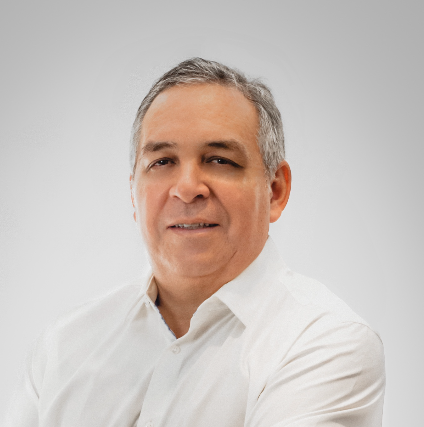
"Finance can be a catalyst for shared wellbeing and lasting progress.”
Jorge Quintanilla Nielsen, CEO and Co-founder Capital + SAFI
7. Company Commitment
CAPITAL + SAFI has been a committed participant in several UN Global Compact initiatives since 2020
8. Recommended Resources
Recommended UN Global Compact Resources

Download Case Study
Disclaimer: This case example is intended strictly for learning purposes and does not constitute an endorsement of the individual companies by the UN Global Compact.