
How Sustainability Credentials Helped DTC World Grow Export Business by 84%
Start Reading

1. Company at a Glance
In this case, we will explore how DTC World, an SME specializing in creative merchandise and corporate gift, turned a customer-driven sustainability assessment into an opportunity to strengthen its business model. The case shows how the company embedded ESG criteria into its internal policies, supplier due diligence, product development and customer engagement, helping it build trust with global clients, access new markets and create a more resilient competitive advantage.
Creative merchandising, Corporate gifts, and POS merchandise solutions
Industry
2006
Founded
Singapore
Headquarters
103
Number of Employees
2. The Challenge
Meeting rising customer expectations for responsible merchandise
As global customers began applying more rigorous sustainability expectations to their suppliers, DTC World recognized that remaining competitive in the corporate gifts and promotional merchandise industry would require more than offering attractive products at the right price. The company needed to demonstrate that its own operations, product choices and upstream supply chain could meet increasingly demanding ESG requirements, including responsible sourcing, fair employment practices, safe working conditions, product sustainability and transparent reporting.
For an SME operating across complex merchandise categories and supplier networks, this created a dual challenge: building the internal systems, data and employee engagement needed to manage sustainability, while also helping suppliers and customers shift toward more sustainable choices without disrupting business operations or increasing costs beyond what the market would accept.
At the same time, the challenge presented a clear business opportunity. By strengthening its sustainability management and supplier due diligence, DTC World could build trust with international clients, differentiate itself from competitors and position itself as a preferred partner for companies seeking responsible merchandise and fulfillment solutions.

3. The Action
Embedding sustainability into business processes and supplier relationships
BUILDING A SUSTAINABILITY MANAGEMENT FRAMEWORK
DTC World started by translating customer expectations into an internal sustainability management framework. The company defined policies, action plans and KPIs to guide decisions across its operations, products and supply chain. This helped move sustainability from an ad hoc response to a structured business process, with clear areas of responsibility and measurable objectives.
CREATING INTERNAL OWNERSHIP THROUGH TRAINING AND DATA COLLECTION
The company recognized that sustainability could not be delivered by leadership alone. Employees were engaged in the process through training, awareness-raising and data collection. The leadership team explained why sustainability was becoming essential to winning and retaining international customers, helping employees understand that reporting, evidence-gathering and continuous improvement were part of the company’s long-term competitiveness.
STRENGTHENING REPORTING AND EXTERNAL ACCOUNTABILITY
DTC World formalized the way it tracked and communicated progress. The company began reporting through the UN Global Compact Communication on Progress and later developed sustainability reporting with reference to the GRI Standards. It also used external tools and guidance to identify gaps, improve disclosure and strengthen the quality of its sustainability management over time.
LEARNING FROM EXTERNAL PARTNERS AND SUSTAINABILITY NETWORKS
To build internal capacity, DTC World engaged with external organizations and sustainability platforms. These partnerships helped the company deepen its understanding of responsible business practices, including anti-slavery, fair employment, ethical trade and sustainability reporting. This external input supported the development of more practical policies, training priorities and supplier requirements.
As a Sedex member, DTC World strengthened its approach to ethical trade. It also followed TAFEP’s fair employment practices to support responsible employment within its own operations. These measures formed part of its approach to managing labour and human rights risks and meeting international customers’ expectations.
EXTENDING SUSTAINABILITY REQUIREMENTS TO SUPPLIERS
DTC World extended its sustainability approach to its supplier base. The company developed a Supplier Code of Conduct covering areas such as responsible sourcing, fair employment practices, safe and clean working environments, non-discrimination, prevention of child labour and forced labour, environmental responsibility, business ethics and information security.
DTC World communicated these expectations to suppliers and integrated them into legally binding contracts, helping ensure that sustainability requirements became part of the commercial relationship. New suppliers were screened against environmental, social and governance criteria, and suppliers with stronger sustainability practices were prioritized in purchasing decisions.
To focus its efforts where risks were higher, the company used a Supplier Risk Analysis Framework to assess supplier exposure and determine the level of follow-up required. Suppliers with higher operating risk profiles could be subject to further checks, including on-site audits and periodic reviews. This allowed the company to concentrate due diligence on suppliers and product categories where potential environmental, labour, human rights, health and safety or compliance risks were more significant.
DTC World also required suppliers to provide evidence where relevant, including certifications or documentation confirming that materials were responsibly sourced and that products met applicable safety or environmental requirements. For manufacturing suppliers, the company monitored workplace health and safety performance under its Supplier Management Framework and carried out regular audits to verify compliance.
When non-conformances were identified, DTC World used a corrective action approach. For mild non- compliances, the company engaged suppliers in dialogue to understand the root causes, placed them under a probationary period and required evidence that corrective measures had been implemented. Suppliers found to be non-compliant were given a defined period to address audit findings, while repeated violations could result in removal from DTC World’s approved supplier list.
Supplier development, monitoring and enforcement were integrated across the Procurement and Supplier Management teams. In parallel, purchasing decision-makers were trained in sustainable procurement so that ESG criteria could be considered not only during supplier approval, but also in day-to-day sourcing decisions. This helped turn responsible sourcing from a policy commitment into an operational process embedded in supplier selection, risk management, purchasing and performance follow-up.
EMBEDDING SUSTAINABILITY INTO PRODUCT DESIGN AND SELECTION
DTC World integrated sustainability into the way promotional merchandise is designed, selected and approved. The company defined what it considers a sustainable product, including products made with recycled materials, biodegradable materials, renewable resources, sustainably produced materials or innovative solutions such as solar-powered devices, as well as products that replace single-use plastic.
Sustainability considerations were applied from material sourcing to manufacturing methods and end- of-life options. DTC World also introduced environmental standards for merchandise materials, requiring suppliers to comply with product composition and safety requirements. Product safety, correct labelling and material transparency became part of the company’s value proposition to customers.
The company also reviewed the credibility of sustainability claims before offering products to the market. When products or materials did not meet its due diligence standards, DTC World could remove them from its product offering, even if they had initially been presented as eco-friendly. This helped the company reduce greenwashing risks and strengthen trust in its sustainable product range.
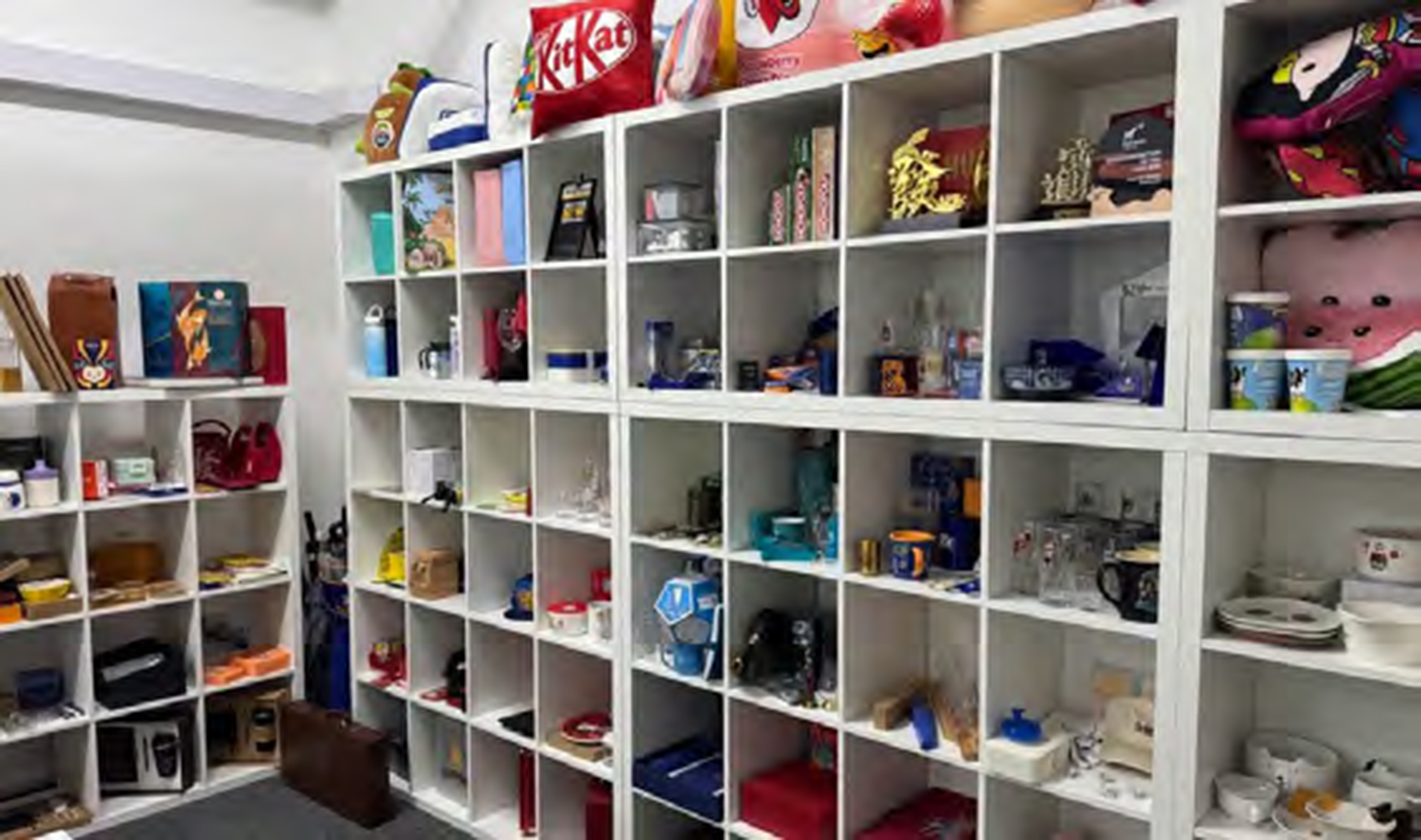
Over time, this product-level approach translated into a broader eco-range.
DRIVING SUSTAINABLE CUSTOMER CHOICES
DTC World also worked to influence customer decisions, recognizing that the environmental impact of promotional merchandise depends not only on the product itself, but also on how campaigns are planned, packaged and delivered.
The company used customer engagement, education and responsible labelling to help clients understand the sustainability attributes of products, including material composition, recyclability and end-of-life considerations. This allowed customers to compare alternatives more transparently and select products that better aligned with their own sustainability goals.
DTC World also encouraged earlier campaign planning. Sales teams were asked to discuss customer needs three to six months before scheduled marketing campaigns, creating more time to plan production and delivery. This made it easier to use sea freight instead of air freight where possible, helping reduce transport-related emissions and avoid last-minute decisions that could increase costs or disrupt production.
The company has also started developing product carbon footprint information for selected products, with the aim of expanding this work to a broader range. This is intended to help customers make more informed choices and support future Scope 3 reporting.
4. Overcoming Barriers
Internal resistance and limited SME resources
At the beginning, one of the main barriers was internal capacity. Employees questioned how they could attend sustainability training, collect data and support reporting while still carrying out their day-to-day responsibilities. DTC World addressed this by clearly explaining that sustainability was no longer a “nice to have”, but a requirement to win and retain international customers.
Cost and availability of sustainable product options
Lower impact products were often more expensive, some customers remained price-sensitive, and there were a limited number of suppliers with the technologies needed to produce more sustainable merchandise at scale. DTC World responded by gradually expanding more sustainable product choices, working with suppliers on new materials.
Supplier readiness and supply chain disruption risks
Introducing sustainability requirements across the supply chain created a risk of disruption, especially because suppliers needed time to understand and implement new expectations. DTC World addressed this through a phased approach, beginning with trial assessments in selected product categories.
Risk of unreliable sustainability claims
To reduce greenwashing risks, DTC World strengthened product due diligence and removed products from its offering when they did not meet its standards, even if they had already been promoted to customers.
5. Impacts & Results
Business / Market Impact
84% increase in export business and 46% increase in revenue in 2019, following DTC World’s EcoVadis Gold medal in 2018 and its appointment as APAC Global Fulfilment partner for a major international brand. Sustainability credentials were a key enabler of access to international customers and new markets.
Continued customer retention: DTC World remains a preferred APAC vendor partner to organizations such as Edelweiss, CommScope and Midea.
External recognition: DTC World received the Singapore Apex Corporate Sustainability Award in 2021.
Sustainable Product Offering
85.9% of product categories offered eco-friendly choices in FY2024. 67.0% in FY2022 and 84.5% in FY2023. Continued incorporation of renewable raw materials such as jute and bamboo.
Supplier Due Diligence and Risk Management
100% of new suppliers screened using environmental, social and governance criteria in FY2024.
100% of scheduled audits for high- and medium-risk suppliers completed.
28 environmental and social assessments carried out for new and existing suppliers in FY2024. 4 suppliers identified as having significant actual or potential negative environmental and/ or social impacts.
6. Key Lessons Learned
Customer expectations can become a catalyst for business transformation
For DTC World, sustainability credentials became a prerequisite for winning and retaining international clients. The company’s experience shows how meeting ESG expectations can enable market access and support business growth, while long-term value depends on embedding these requirements into management systems, product decisions and supplier relationships.
Sustainability needs internal ownership, not only leadership commitment
Senior leadership helped set the direction, but implementation required employees to be engaged.
Sustainable product claims must be backed by evidence
Offering eco-friendly products is not enough if claims are not verified.

"To survive, win and keep international clients, embarking on the journey of sustainability is not a ‘nice to have’ but ‘must have’.”
Cheng Yee Chin, Co-founder and General Director, DTC World
7. Company Commitment
DTC World has been a commited participant in the UN Global Compact since 2018.
8. Recommended Resources
Recommended UN Global Compact Resources


Download Case Study
Disclaimer: This case example is intended strictly for learning purposes and does not constitute an endorsement of the individual companies by the UN Global Compact.