Translating Ambition into Execution: Takeaways from the 2026 UN Global Compact Leaders Summit
Read more

Sanda Ojiambo, CEO & Executive Director of the UN Global Compact, reflects on the 2026 UN Global Compact Leaders Summit.
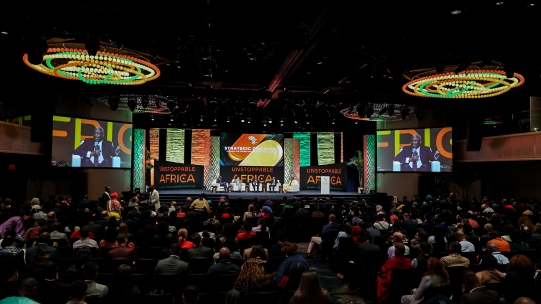
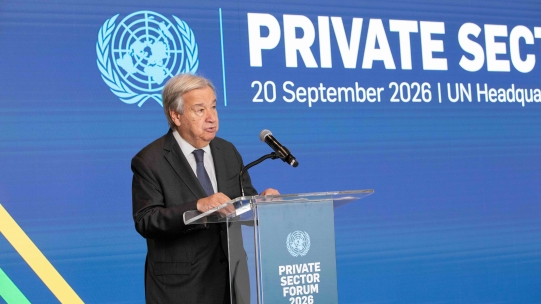
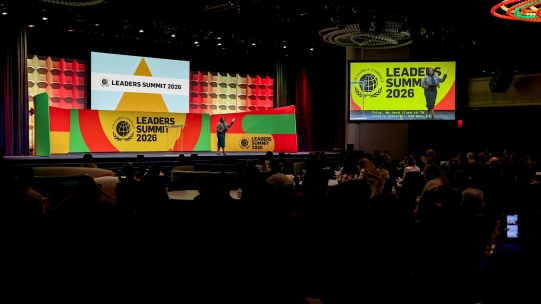
Last month at the UN Global Compact Leaders Summit in New York, I had the privilege of welcoming more than 600 leaders, C-suite executives, investors, policymakers, and civil society partners representing 437 organizations across 78 countries during the High-level Week of the 81st session of the UN General Assembly. Together, the publicly traded companies present represented $8.8 trillion in combined market capitalization, underscoring the immense economic weight and potential for impact assembled in one room.
Our discussions centred on a critical, practical question facing every executive today: How do we build resilient, competitive companies amid geopolitical tension, economic volatility, supply chain disruption, shifting regulations and the rapid rise of AI?
My message throughout the Summit was direct: business leaders are operating under extraordinary pressure, but the answer cannot be to retreat into short-termism.
Resilience is built when purpose is strong, relevant, and embedded directly in the decisions that shape enterprise strategy and value. Sustainability is not separate from business performance. It is part of how companies remain competitive and resilient in a changing world.
Here are the key insights and strategic priorities that emerged from our conversations:
Key Priorities for Strategic Leadership
1. Collaboration Is Essential—No Single Company Can Act Alone
Many of the systemic barriers facing business today, such as misaligned market incentives, fragmented regulatory standards, financing gaps and value-chain bottlenecks, cannot be solved by any single company acting alone. Over 90% of our Leaders Summit participants noted that driving progress requires cross-sector partnerships, shared risk-taking, and active pre-competitive engagement with policymakers.
2. Supply Chains Are Strategic Value Drivers
Procurement is shifting from a compliance exercise to a primary engine for resilience and value creation. As companies navigate Scope 3 accountability, trade fragmentation, and cost barriers, they must use purchasing power to build vendor capabilities, scale living wages, and close persistent gender leadership and pay gaps across value chains.
3. In the Age of AI, Trust and Governance Are Paramount
Artificial Intelligence was a central theme throughout the Summit, addressed not just as a standalone technology, but as a compliance tool, a growth engine capable of expanding market valuations, and an environmental liability due to data-center water and energy trade-offs. AI continues to accelerate rapidly and businesses and institutions need to be poised to make decisions on scale, scope, uptake and execution with agility, while maintaining a lens on governance, trust and accessibility.
4. Capital Exists—We Must Mobilize the $147 Trillion on the Sidelines
Sessions across the Summit highlighted a stark reality: while there is a $1.2 trillion climate gap and a $4 trillion SDG financing gap, $147 trillion in global liquidity is waiting to be mobilized.
Capital exists, but it is too often "lost in translation" between companies and capital providers. Unlocking these funds at scale requires blended finance, risk-sharing structures, and public-private partnerships.
5. Macroeconomic Policy Must Price Externalities
We explored how policy, capital, and innovation must align. Strong leaders recognize that long-term value creation depends on detecting, addressing, and properly pricing emerging externalities today.
What’s Next: Moving the 2026–2030 Strategy Forward
The Summit reflects the core ambition of our UN Global Compact 2026–2030 Strategy: mobilizing business from commitment to measurable execution at scale.
To break down market, policy and financial barriers, we are expanding our collective action infrastructure across climate and nature, living wages, gender equality and sustainable finance to aggregate demand, de-risk investments, and scale long-term solutions across global value chains.
Strategic Milestones Ahead:
- COP31 (Türkiye, November): Driving corporate implementation of aligned climate and nature transition plans.
- Country Network Engagement: Leveraging our 60+ Country Networks to translate these outcomes into localized, country-level action plans—focusing on gender-responsive procurement, living wage collective action, and regional financing frameworks.
- Collective Action Infrastructure Launch (April 2027): Officially launching our shared multi-stakeholder platforms to address systemic industry barriers at scale.
The scale of the challenges ahead exceeds the reach of any individual organization. But so does the magnitude of the opportunity for leaders willing to transform their business models, innovate with purpose, and execute for the long term.
I look forward to building this momentum together across our global network.